Claude Code CLI 2.1.235 错误与诊断机制图谱
读者问题: 一条 Error(...)、一行 debug log、一个 tool failure 和一次 telemetry error 到底是什么关系,用户看到“失败”时哪些状态已经改变、客户端又会在哪里恢复?
一句话模型: 2.1.235 把失败拆成“异常对象 -> 语义分类 -> 局部恢复 -> 用户结果 -> debug/Hook/telemetry 观察面”;同一异常可以被恢复后只留日志,也可以成为 tool_result、turn terminal 或进程 exit,不能用一条错误文案代替整条状态机。
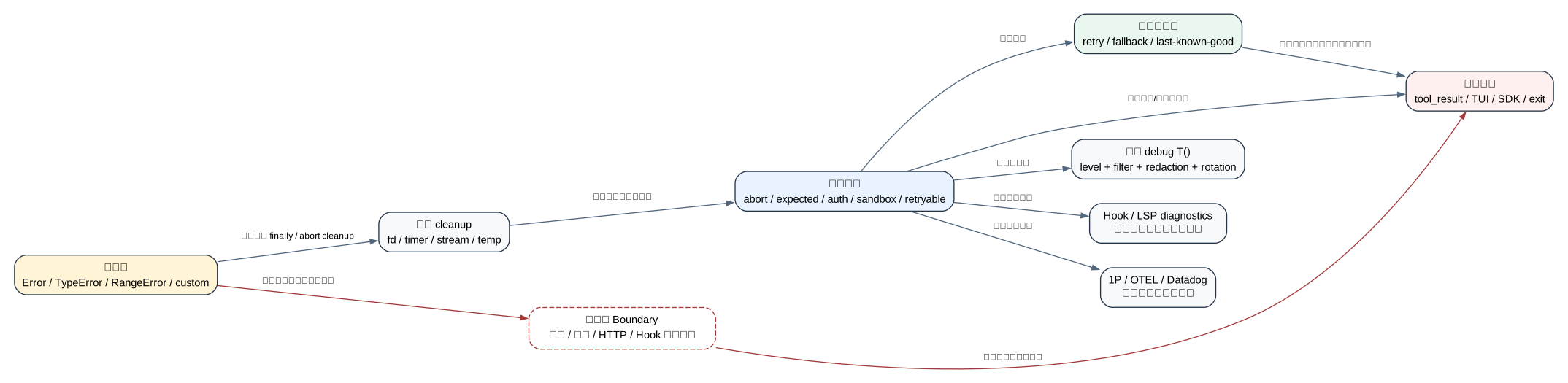
贯穿场景:Bash 在 sandbox 中命中策略。执行层抛出带 code/stdout/stderr/interrupted/hadSandboxViolation 的 ShellError;tool pipeline 先区分 interrupt、sandbox violation、expected tool error 与未知异常。只有在“sandbox violation、当前 tool 允许 unsandboxed retry、调用方没有显式禁用该恢复”同时成立时才自动重试一次;否则生成失败 tool_result。debug log 记录路径,telemetry 只发分类字段,PostToolUseFailure/StopFailure 观察失败,但已经启动的子进程或外部系统副作用不能由“抛错”自动回滚。
60 秒看懂:五层状态归属
| 层 | 谁拥有 / 状态归属 | 典型载体 | 对用户的意义 |
|---|---|---|---|
| 触发点 | 参数、文件、网络、进程、stream、协议当前状态 | Error/TypeError/RangeError/自定义 Error |
说明哪里检测到不变量破坏 |
| 语义分类 | abort、expected、permission、sandbox、auth、retryable、fatal | class/name/code/status/cause | 决定重试、降级、阻止还是终止 |
| 局部恢复器 | retry counter、fallback、last-known-good、cleanup、resume state | catch/retry/controller | 决定本操作是否还能继续 |
| 产品表面 | tool_result、stderr/TUI、SDK result、Hook event、exit code | human message + machine code | 用户真正看到和可操作的结果 |
| 观察面 | debug file、in-memory errors、1P/OTEL/Datadog | redacted log/event/error envelope | 用于诊断,不拥有业务回滚 |
生命周期:错误不是终点,而是分流点
- 触发点构造异常。
TypeError多用于调用契约或类型不变量,RangeError多用于界限,普通Error覆盖依赖和产品状态;自定义 class 携带 code、path、status、stdout/stderr、reasonCode 等机器字段。 - 立即清理局部资源。
finally/abort handler 关闭 stream、timer、fd、child process 或临时文件;清理失败常只追加 diagnostic,不能覆盖主错误。 - 判断是否属于控制流。
AbortError、APIUserAbortError、StreamClosedAbortError与 shutdown/background reason 不按未知崩溃处理,通常映射为 interrupted/cancelled。 - 按子系统分类。 tool pipeline、request retry、MCP、Hook、config/startup、storage/rewind 各自解释 class/code/status;全局
Error名称不是最终 taxonomy。 - 执行局部恢复。 可重试网络错误、beta strip、fallback、配置 last-known-good、sandbox unsandboxed retry、MCP reconnect 各有独立计数和 gate。
- 生成用户结果。 恢复成功则错误可能只留 debug;恢复失败则进入 tool_result、TUI/stderr、SDK result 或 terminal reason。
- 复制到观察面。
T()写 debug,Re()进入错误 sink/in-memory buffer,1P/Datadog/Hook 记录经过约束的字段;这些出口不会替业务状态机做恢复。 - 保留副作用边界。 文件 rename、进程命令、HTTP POST、Hook command 已经执行后再抛错,失败结果只说明“未确认完整成功”,不证明零副作用。
三种内建 constructor:数量与含义
- constructor callsites 共 4,831:
Error4,055、TypeError742、RangeError34;三者合计必须等于总数。 - constructor message argument shape:
string2,891,template1,493,call169,identifier110,member-or-call67,missing59,expression23,conditional17,array2。missing或动态表达式表示静态阶段拿不到最终 message,不表示没有错误。 - diagnostic
T()callsites 共 5,403;显式/默认 level:default-debug3,325,verbose16,debug42,info58,warn962,error1,000。没有第二参数时由T()默认成 debug。 - diagnostic message argument shape:
template4,413,string859,identifier55,member-or-call33,conditional28,call15。template 占多数,说明最终日志常带运行时 path/status/id,公开时不能只扫描固定 literal。 - exact owner projection 覆盖全部 10,234 条 callsite:
Product exact caller308、Dependency exact package/function376、Unresolved9,550;当前精确收口 684 条,不用宽行区间或相似文案补 owner。 - 分流后 Error constructor 为 Product 54 / Dependency 376 / Unresolved 4,401;Diagnostic 为 Product 254 / Dependency 0 / Unresolved 5,149。
精确 owner 投影:同一句错误为什么不能直接归模块
完整逐 callsite 结果见 error-diagnostic-owner-index.md,机器投影见 error-diagnostic-owner-projection.jsonl,覆盖与哈希见 error-diagnostic-owner-summary.json。这一层解决原清单最关键的缺口:function + immediate consumer 只能告诉读者“错误在当前 lexical scope 里怎样被构造”,不能自动回答它属于 Claude Code 产品、打包依赖,还是哪一个恢复 owner。
一个具体反例是 Zod。"Unprocessed schema. This is a bug in Zod." 位于经过复核的 Zod 内部 scope,可以标成 Dependency exact package/function;但另一个 caller 即使也写着 expected a Zod schema,仍可能是 Agent SDK 或产品 adapter 对输入的二次约束,不能靠 Zod 关键词继承 owner。同理,OpenTelemetry protobuf generated codec 与同一 canonical 行上的其他 constructor 不会因为行号相同一起归入 OTLP。
投影因此把结论拆成五个互不替代的字段:
| 字段 | 精确证据 | 为什么仍可能 Unresolved |
|---|---|---|
| Product / Dependency owner | 完整 callsite identity 命中 reviewed allowlist | 同名 function、同一行或相似 message 都不构成 identity |
| lexical function | AST scopePath + functionKind + function |
压缩后短名不能单独说明产品模块 |
| immediate consumer | constructor/T() 的直接 AST parent/relation/role | throw 或 expression statement 不说明上层怎样消费 |
| catch / retry owner | exact Product rule 直接绑定 catch wrapper 或 attempt/breaker owner | owner 已解析不等于每条日志都持有 retry counter |
| tool-result / user-surface owner | exact ledger/end-turn 或输出 wrapper | debug diagnostic 不自动进入模型,也不自动显示给用户 |
当前高置信批次只把 4 条 exact caller 提升为 catchOwner:两个 PermissionRequest async catch,以及 PostToolUse outer catch 内的 cancel/timeout;相邻 Hook deny/interrupt 没有继承。retryOwner 仍只有 99 条,tool-result owner 13 条,user-surface 继续为 0。这个保守结果比把几千个 T() 全称为“Claude Code 日志”更有用:排障者能区分已确认状态 owner 与仍待追踪的 caller chain,也能看到剩余欠账,而不是从一个很大的覆盖率数字里误读完整性。
这些计数来自 AST callsite,不等于 4,831 个产品故障:打包依赖、SDK、内嵌 runtime 都在同一 bundle。强结论必须回到 consumer。三个 constructor 的实用区别是:
TypeError:调用方式、参数类型、private member 等程序契约破坏。它通常不适合用户重试同一个输入;若来自依赖,必须由上层翻译。RangeError:数值/长度/递归/索引越界。产品层常在 schema 或 CLI parser 提前截住,漏到顶层更像实现或依赖错误。Error:通用载体,语义完全依赖 class/name/code/status/cause 和捕获位置。只看 message 无法判断可恢复性。
产品错误类如何变成可操作结果
启动与配置:在进 Agent Loop 前失败
基础错误层定义 CliUserError、ConfigParseError、ShellError、AbortError、TeleportOperationError 和 telemetry-safe error,见 reverse/javascript/cli.readable.js L13536-L13768。启动器只对前两类做专门用户处理:CliUserError 直接写 stderr 并 exit 1;ConfigParseError 在交互模式可打开修复 dialog,非交互则打印文件和原因后 exit 1,见 L591180-L591244。其他异常继续抛给更高层,不能被误写成“所有启动错误都友好降级”。
interrupt 与 stream close:控制流,不是普通失败
Ic() 同时识别内部 AbortError、SDK user abort、标准 AbortError name 和 Axios cancel,见 L13538-L13545。Agent Loop 为 user-cancel、remote-cancel、shutdown、interrupt、background、fallback edit 和 recovery timeout 建立不同 abort reason;tool terminal 再结合 signal reason 映射 interrupted 或 cancelled,见 L92624-L92628、L315980-L316002。因此 Ctrl-C、stream 关闭和 timeout 不能统一统计成 tool failure。
tool pipeline:expected error 与未知异常分开
tool 分类器优先识别 MCP auth/OAuth、Shell、MCP call、filesystem、read budget、telemetry-safe、malformed command,再用受控 class allowlist映射 tool_expected_error;剩余异常才是 tool_call_threw,见 L315987-L316027。这个分类影响 telemetry 和 UI 的“sad/expected”语义,但不改变原始 tool_result:模型仍需看到足够的失败信息决定下一步。
filesystem 与安全写入:失败可能保护了原文件
原子写入先写 temp、应用权限、fsync、rename;fchmod/fsync 不支持可降级,但 temp write/rename 失败会记录主错误并清理。另有 SymlinkWriteRefusedError、StagingDirTamperedError、PathTraversalError 等把路径不变量变成显式 class。安全拒绝说明目标写入没有按请求完成;若之前已创建 temp、修改别处或调用 Hook,仍需逐项判断副作用。
API、stream 与 fallback:恢复状态属于请求控制器
API 层区分 status、request ID、stream idle/suspended、Bedrock content type、refusal/fallback 与 retry exhaustion。max-output continuation、signed-thinking resume、context-hint strip、server-fallback beta strip 都有自己的计数与 transcript 规则,不能用一个“自动重试 3 次”覆盖全部请求错误。详见 resilience-and-recovery.md;本图谱强调这些恢复完成后,原异常可能只留 debug/telemetry,不再成为 terminal。
MCP、Hook、Agent 与 Workflow:外部 owner 不同
MCP error class携带 server/tool/transport/schema;Hook failure还要区分前置 fail-closed、后置 non-blocking 和 callback stream close;Workflow/Agent 有 precondition、budget、remote termination 与 monitor 错误。它们共同使用 Error 基类,但恢复 owner 分别是 MCP connection、Hook runner、subagent/workflow orchestrator,不能互相套用重试规则。
字段怎样驱动恢复,而不是只出现在日志里
错误对象的价值不在 class 名本身,而在上层只读取哪些字段。2.1.235 的关键判断可以压缩成下面这张“字段 -> 决策”表:
| 字段/关系 | 由谁写 | consumer 怎样读 | 恢复或终态 | 误读风险 |
|---|---|---|---|---|
name=AbortError / Axios __CANCEL__ |
abort controller、SDK、transport | Ic() 与各 loop 的 signal reason 联合判断 |
interrupted/cancelled;通常不报未知崩溃 | 只看 name 会丢 user/remote/shutdown/background 区别 |
ShellError.code |
Bash/PowerShell runner | tool classifier 和结果 formatter | shell failure;interrupt 单独处理 | exit code 非零不证明命令零副作用 |
ShellError.hadSandboxViolation |
sandbox parser | Bash tool retry gate | 条件满足时只自动 unsandboxed retry 一次 | 不是所有 sandbox failure 都会放宽执行 |
errno-shaped code |
fs/network/runtime | St/om/jx/bO 等 sanitizer/classifier |
fs expected error、transport retry 或用户修路径 | 同一个 ENOENT 在不同 owner 下语义不同 |
HTTP status |
SDK/Axios wrapper | auth、retry、beta strip、quota consumer | 401 refresh、400定向降级、429/5xx backoff 等 | “非 2xx”不是统一重试条件 |
API requestID / client request ID |
response/request wrapper | retry、telemetry、debug correlation | 关联多次 attempt,不拥有恢复 | ID 可关联敏感会话,不应公开原值 |
reasonCode |
Artifact/expected product errors | tool expected-error allowlist | 稳定 machine code + 人类 message | 只有格式受控的 reasonCode 才进入 telemetry code |
cause chain |
wrapper/custom error | 最多深度 5 的 cause 查找与 provider classifier | 保留根因类别,外层换用户文案 | 无限递归/任意对象不会被完整展开 |
telemetryMessage/errorClass |
显式 telemetry-safe wrapper | error tracker 和 tool classifier | 上传受控替代文本/类别 | “safe”只覆盖该字段,不代表周边 payload 全安全 |
stdout/stderr |
process runner | tool result、debug、Hook payload | 给模型/用户诊断,可能截断 | 内容来自外部程序,既可能敏感也可能带指令文本 |
这里还有一个重要优先级:控制流先于业务失败,具体 owner 先于通用 Error。例如 ShellError 同时可能带 interrupted 和 non-zero code,上层先把 interrupt 映射为终止原因;MCP 401 若能识别 auth owner,会走 reauth,而不是先落入 generic tool_call_threw。只有前面的专门分支都不匹配,才使用未知异常兜底。
恢复预算与“只试一次”的边界
恢复器不是一个全局 retry 开关。不同层各自拥有预算,而且一次操作可能依次穿过多个预算:
- Bash sandbox violation 的 unsandboxed retry 由 tool 层决定,不复用 HTTP retry counter;用户或 policy 不允许 unsandboxed 时直接保留失败。
- request 429/5xx/backoff、stream resume、max-output continuation、fallback model、fallback beta strip 各有独立状态;一次请求的 attempt 增加不等于 Agent Loop turn 增加。
- LSP handler 不是失败一次就弹 warning;同一 server 连续累计到 3 次才输出“可能是 server 或 diagnostic processing 问题”。
- debug writer flush 最多观察 backend line 是否继续增长 3 轮;这是退出前 drain,不是业务操作重试。
- error ring 只保留最近 100 条;旧错误被移出内存不等于磁盘 debug、telemetry 或 transcript 已删除。
因此排障时要问“哪个 owner 的第几次 attempt”,不能只问“Claude Code 重试了几次”。如果用户看到两次外部 POST,也不能先归因于 HTTP retry:可能是业务提交、auth refresh 后重建、fallback lane 或用户再次执行,需要 request ID、method/path、attempt reason 一起判断。
Debug logger:T() 实际做了什么
T(message, {level}) 默认 debug,交给单例 DebugLog;不是 console.log 的别名,见 L15235-L15250。关键机制:
| 机制 | 精确行为 | 证据 |
|---|---|---|
| level | verbose=0, debug=1, info=2, warn=3, error=4,低于最小等级直接丢弃 |
L15250 |
| 启用 gate | 外部构建默认需 --debug/--debug-file/DEBUG env 或运行时 /debug;test 环境无显式文件时不写 |
L14917-L14983 |
| filter | --debug=<filter> 决定 shouldLog;多行在 formatted output 后会 JSON stringify |
L14940-L14955 |
| redaction | 每行写入前经 gp() secret scanner;输出包含 ISO timestamp 和 level |
L14780-L14882、L14949-L14960 |
| buffering | writer 每 1 秒 flush,按内容长度计 buffer 100;退出时同步 drain 未刷 chunk | L15138-L15163 |
| rotation | raw log 超过 10,485,760 bytes 后转为 .1,失败时尝试 unlink/rename |
L14996-L15016、L15250 |
| storage | 默认 <config>/debug/<session>.txt;Storage V5 可写 namespace=log, channel=debug |
L14961-L14968、L14899-L14907 |
隐私边界: logger 的 regex 会遮盖多类 key/token/private key,但它不是信息流证明。普通路径、prompt、tool input、Hook output、server message 仍可能进入 debug;即使 secret scanner命中,也不保证所有自定义凭据格式可识别。因此仓库公开前仍需独立绝对路径/凭据扫描。
Error sink、Datadog 与 telemetry:观察面不是一条管道
Re(error) 先把非 Error 转成 Error,然后逐项检查六个明确的 provider env 模式:CLAUDE_CODE_USE_BEDROCK、CLAUDE_CODE_USE_VERTEX、CLAUDE_CODE_USE_FOUNDRY、CLAUDE_CODE_USE_ANTHROPIC_AWS、CLAUDE_CODE_USE_ANTHROPIC_GOOGLE_CLOUD、CLAUDE_CODE_USE_MANTLE。任一命中,或 DISABLE_ERROR_REPORTING、essential-traffic 模式生效时,error sink 直接退出;普通 first-party Anthropic 不会仅因 provider 这一项被禁用。否则它保存 stack/message + timestamp 到最多 100 条的内存 ring,并投递 sink,见 L17282-L17351、L17394。这和 T() 本地 debug 是两条独立通道。
Datadog error envelope会:
- 把 message 截到 4,000 字符、formatted stack 截到 16,000 字符、frames 最多 20;
- sanitize class、errno、top frame、entrypoint、model/provider 等字段;
- 把
APIUserAbortError、AuthenticationError、McpSessionExpiredError和少数已知网络 top frame 当噪声过滤; - 区分 handled
logError、unhandled_rejection、uncaught_exception。
对应实现见 L110940-L111030。一方 event、OTEL log/span、Datadog error tracking 和 debug file 的开关、字段、采样与默认值不同,不能看到 T(...,{level:"error"}) 就断言它被上传。
LSP diagnostics:业务诊断内容怎样进入上下文
LSP diagnostics 不是 T() 消息。handler 验证 URI、range、message、severity,丢弃 malformed item;按 URI/内容去重后进入 pending registry,连续 3 次 handler failure 才追加 warning,见 L193842-L193901。注入模型时:
- severity 映射为 Error/Warning/Info/Hint;
- 人类摘要用 1-based line/column;
- 整个 summary 超过 4,000 字符截断;
- 成功交付后清 pending/delivered state,失败时记录 error 并返回空 attachment。
格式化与 4,000 字符阈值见 L180990-L181040,attachment 获取失败回退见 L322743-L322763。这类 diagnostics 会占模型上下文;debug log 不会自动进入模型,除非 /debug 或其他工具显式读取。
Token、延迟、成本、隐私与副作用
| 影响面 | 错误/诊断链怎样改变它 | 读者应如何判断 |
|---|---|---|
| Token | LSP diagnostics 最多形成 4,000 字符 attachment;tool error、Hook output、MCP error 和恢复提示也可能进入下一轮模型上下文 |
本地 T() debug 不会自动入模;只有被包装为消息、tool_result 或 attachment 的内容才占上下文 token |
| 延迟 | cleanup、分类、network backoff、stream resume、fallback、MCP reconnect、debug flush 和 Hook runner各有独立等待 | “发生一次 Error”不能推导总等待;应记录 owner、attempt、timeout 和是否进入下一层恢复器 |
| 成本 | 重试、fallback model、重新生成、重新执行 tool 或人工重跑可能增加 API/计算成本 | error/diagnostic callsite 数量不是生产故障率或账单;实际成本需要 runtime usage/attempt 证据 |
| 隐私 | debug、stderr/tool_result、LSP message、error sink、telemetry/Datadog拥有不同字段、redaction、采样和存储位置 | secret scanner 与字段裁剪是局部控制,不证明 path、prompt、Hook output 或自定义 credential 全部被移除 |
| 安全 | path/symlink/tamper、permission、sandbox、auth 与 schema 错误可能是 fail-closed 保护结果 | “失败”不总是可靠性问题;放宽规则或盲目重试可能绕过原本阻止危险写入的控制 |
| 副作用 | process、file rename、HTTP POST、Hook command 或远端 write 可能先成功,随后在 readback/cleanup/response parse 处抛错 | tool_result、abort、tombstone、resume 或 retry只改变客户端后续状态,不能证明已执行的外部动作被事务性撤销 |
这也是为什么排障报告不能只粘贴最后一行 message。至少要把触发 owner、class/code/status/cause、发生在副作用前后、局部恢复次数、最终用户 surface 和观察通道分开;否则同一句 failed 既可能表示“安全拒绝且目标未改”,也可能表示“远端写入完成但确认失败”。
用户症状与恢复决策表
| 用户症状 | 先看哪个 owner | 客户端可能恢复 | 不能据此断言 |
|---|---|---|---|
| 命令启动即 exit 1 | CLI parser/config loader | 修配置、交互 dialog | Agent Loop 已启动 |
| tool_result 显示失败 | tool executor + permission/sandbox | 重试、改输入、unsandboxed retry | 外部副作用为零 |
| 回答中断/取消 | abort reason + stream owner | resume/new turn | 远端请求一定停止 |
| “API error”后自动继续 | request retry/fallback controller | backoff、model fallback、beta strip | 第一次请求没计费/没产生服务端副作用 |
| MCP tool unavailable | MCP transport/auth/schema owner | reconnect、reauth、refresh tools | server 未配置 |
| Hook error但主流程继续 | Hook stage | 后置 Hook non-blocking | Hook command 没做外部动作 |
| debug 有 error、界面正常 | logger/局部 catch | 已被局部恢复 | 产品动作失败 |
| telemetry/Datadog有 error | observability sink | 不负责恢复 | 用户一定看见同一文本 |
| diagnostics 被截断 | LSP attachment formatter | 下一轮重新获取 | 原始 LSP 只有 4,000 字符 |
从一行日志反查到可验证结论
面对 Failed to ...、retrying 或 continuing without ...,按下面顺序查,能避免把诊断文本写成行为事实:
- 在
diagnostic-message-callsites.jsonl找comparisonKey、function、argument shape 和显式 level;template 中的 path/status/id 只在运行时才确定。 - 回到 readable callsite,看
T()前后的if/catch/return/throw。T(...); return null、T(...); throw、T(...); continue对用户的结果完全不同。 - 找调用者怎样消费返回值。返回
null可能代表“功能关闭后继续”,也可能在上层立即变成 fatal precondition;不能停在当前函数。 - 查副作用发生在日志前还是日志后。
POST已返回异常、temp file 已写、Hook command 已启动和仅做参数校验属于不同恢复成本。 - 最后才核对用户表面、Hook event、telemetry 和 exit status;若没有精确 Probe,只写 Static 分支与 Boundary,不补想象中的实际输出。
反过来也成立:用户看见一个简短错误,不代表 debug 只有这句话。产品层会把内部 class/status/cause 压成可操作文案,原始 stack 可能只在 debug/error sink;公开 issue 时应先复现、裁剪最小相关区间并再次做 path/token 清理,而不是上传整个 session debug 文件。
全量清单怎样使用,而不是怎样堆出来
原始 evidence substrate 保留:
error-message-callsites.jsonl:4,831 个Error/TypeError/RangeErrorAST 调用点,含 constructor、argument shape、function、line/offset;error-message-templates.jsonl:1,526 个模板/表达式聚合;error-message-literals.txt:2,248 个固定 literal;diagnostic-message-callsites.jsonl:5,403 个T()调用点;diagnostic-message-templates.jsonl:4,438 个模板/表达式聚合;diagnostic-message-literals.txt:830 个固定 literal。
正确读法是:先用本文确定 owner 和恢复问题,再在 JSONL 里按 calleeRole/function/nameArgument/comparisonKey 找候选,最后回到 readable consumer。不能按英文关键词把 failed 全算成用户错误,也不能按 level:error 全算成上传 telemetry。
证据与边界
Static: constructor、logger、error sink、tool classifier、startup catch、LSP diagnostics 和阈值都来自 2.1.235 可读 bundle;计数来自 canonical inventory 的 AST/regex 生成物。可读视图是格式化重建层,不是 Anthropic 原始源码。
Boundary: 没有 exact-binary Probe 的分支不声明实际触发;没有网络捕获的 observation 不声明已上传;异常发生在外部副作用之后时不声明事务回滚;服务端 error taxonomy、Datadog backend retention、Hook 外部程序行为和 provider 网络状态不在客户端发布物内。
复核强结论时应从 inventory 行回到真实 consumer:基础错误 class 与 abort classifier 见 reverse/javascript/cli.readable.js L13536-L13768,debug writer、filter、rotation 与 redaction 见 L14780-L15250,error sink 见 L17282-L17394,LSP attachment 与 handler 见 L180990-L181040 和 L193842-L193901,tool error 分类见 L315980-L316027。这些位置证明客户端分支与阈值,不能证明某次真实运行触发、日志已上传或外部动作已回滚。